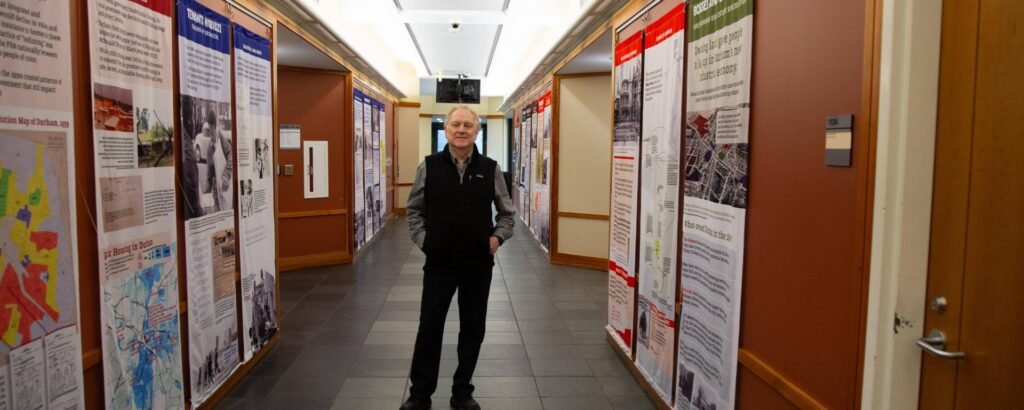
Robert is Professor Emeritus of Public Policy and History at Duke University. He earned a BA and PhD from the University of North Carolina-Chapel Hill and an MA from the Graduate Faculty at the New School for Social Research in New York. He was and raised in North Carolina. His parents were labor and civil rights activists in the post-WWII and later small business owners.
As a graduate student at UNC he worked at the Southern Oral History Program and was a co-author of Like A Family: The Making of a Southern Cotton Mill World. His doctoral dissertation was published as Civil Rights Unionism: Tobacco Workers and the Struggle for Democracy in the Mid-Twentieth Century South, and won multiple awards.
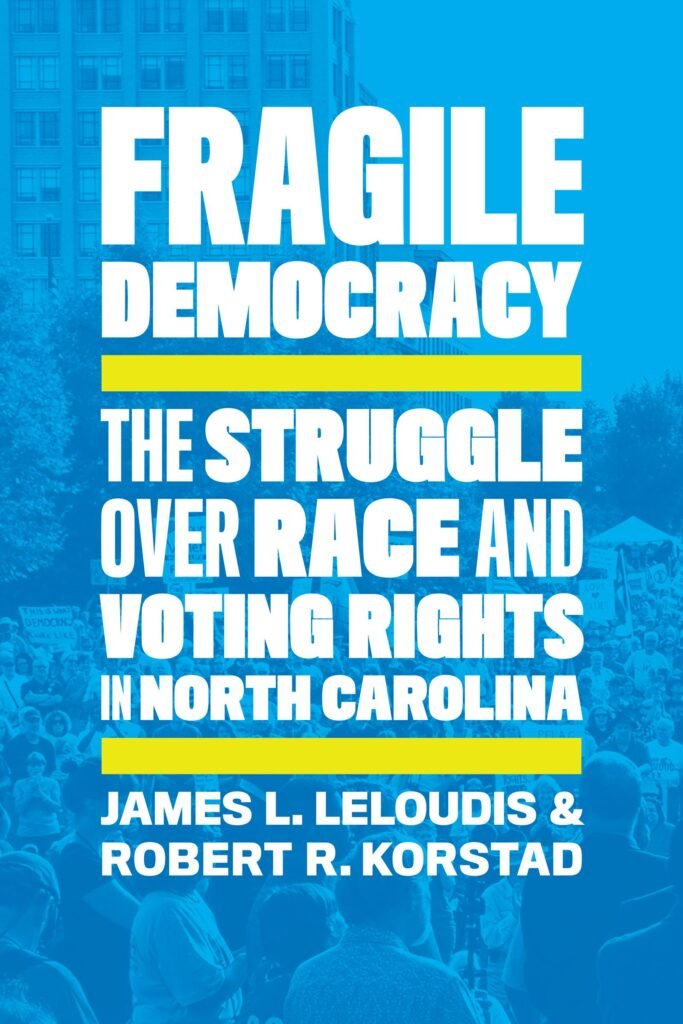
With Dr. James Leloudis, Professor of History of UNC, he has published two books on politics and social welfare policy in North Carolina: To Right These Wrongs: The North Carolina Fund and the Battle to End Poverty and Inequality in 1960s America and Fragile Democracy: The Struggle Over Race and Voting Rights in North Carolina (Chapel Hill: The University of North Carolina Press, 2020).
In retirement, Korstad has helped support performances of a “jazz opera” created by Steve Jones and produced by Elise Bryant, “Love Songs from the Liberation Wars,” draw from Civil Rights Unionism. He also served on the Advisory Committee of Labor South, Center for Working Class Studies.
Other Works
America is at war with itself over the right to vote, or, more precisely, over the question of who gets to exercise that right and under what circumstances. North Carolina is a battleground for this debate, and its history can help us understand why – a century and a half after ratification of the Fifteenth Amendment – we remain a nation divided on the issue of free and fair elections.
Fragile Democracy tells the story of race and voting rights, from the end of the Civil War until the present day. It shows that struggles over the franchise have played out through cycles of emancipatory politics and conservative retrenchment. When race has been used as an instrument of exclusion from political life, the result has been a society in which vast numbers of Americans are denied the elements of meaningful freedom: a good job, a good education, good health, and a good home. This history points to the need for a bold new vision of what democracy looks like.
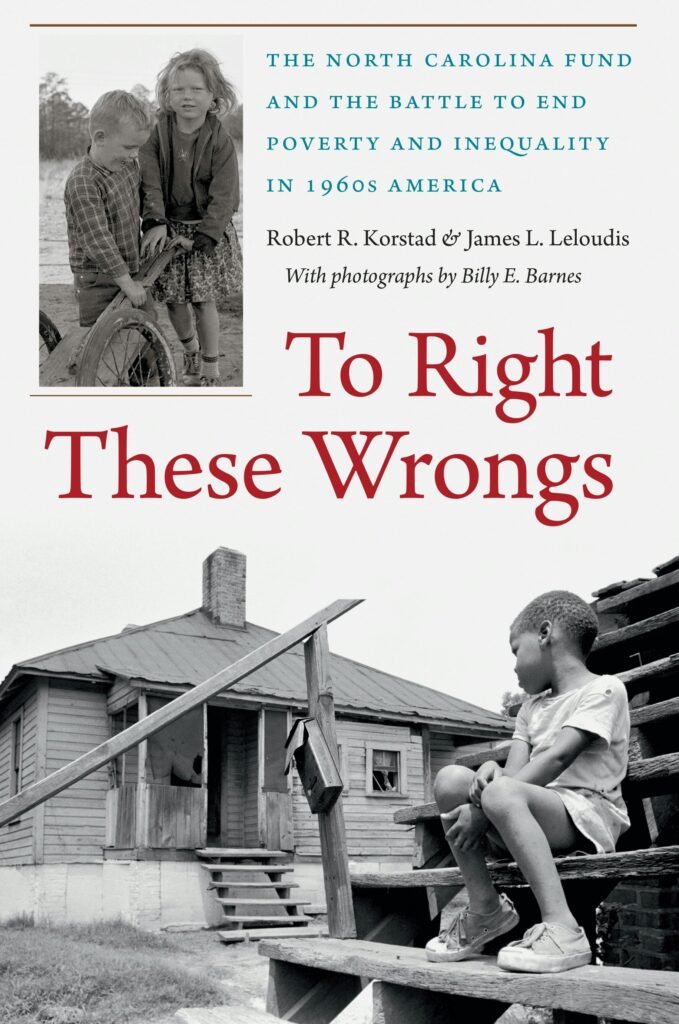
When Governor Terry Sanford established the North Carolina Fund in 1963, he saw it as a way to provide a better life for the “tens of thousands whose family income is so low that daily subsistence is always in doubt.” Illustrated with evocative photographs by Billy Barnes, To Right These Wrongs offers a lively account of this pioneering effort in America’s War on Poverty.
Robert Korstad and James Leloudis describe how the Fund’s initial successes grew out of its reliance on private philanthropy and federal dollars and its commitment to the democratic mobilization of the poor. Both were calculated tactics designed to outflank conservative state lawmakers and entrenched local interests that nourished Jim Crow, perpetuated one-party politics, and protected an economy built on cheap labor. By late 1968, when the Fund closed its doors, a resurgent politics of race had gained the advantage, led by a Republican Party that had reorganized itself around opposition to civil rights and aid to the poor.
The North Carolina Fund came up short in its battle against poverty, but its story continues to be a source of inspiration and instruction for new generations of Americans.
Praised as “viscerally powerful” (Publishers Weekly), this remarkable work of oral history captures the searing experience of the Jim Crow years through first-person interviews carefully collected by researchers at Duke University’s Behind the Veil project. Newly relevant today as Americans reckon with the legacies of slavery and strive for racial equality, Remembering Jim Crow provides vivid, compelling accounts by men and women from all walks of life, who tell how their day-to-day lives were subjected to profound and unrelenting racial oppression.
“A shivering dose of reality and inspiring stories of everyday resistance” (Library Journal), Remembering Jim Crow is a testament to how Black Southerners fought back against the system, raising children, building churches and schools, running businesses, and struggling for respect in a society that denied them the most basic rights. Collectively, these narratives illuminate individual and community survival and tell a powerful story of the American past that is crucial for us to remember as we grapple with Jim Crow’s legacies in the present.
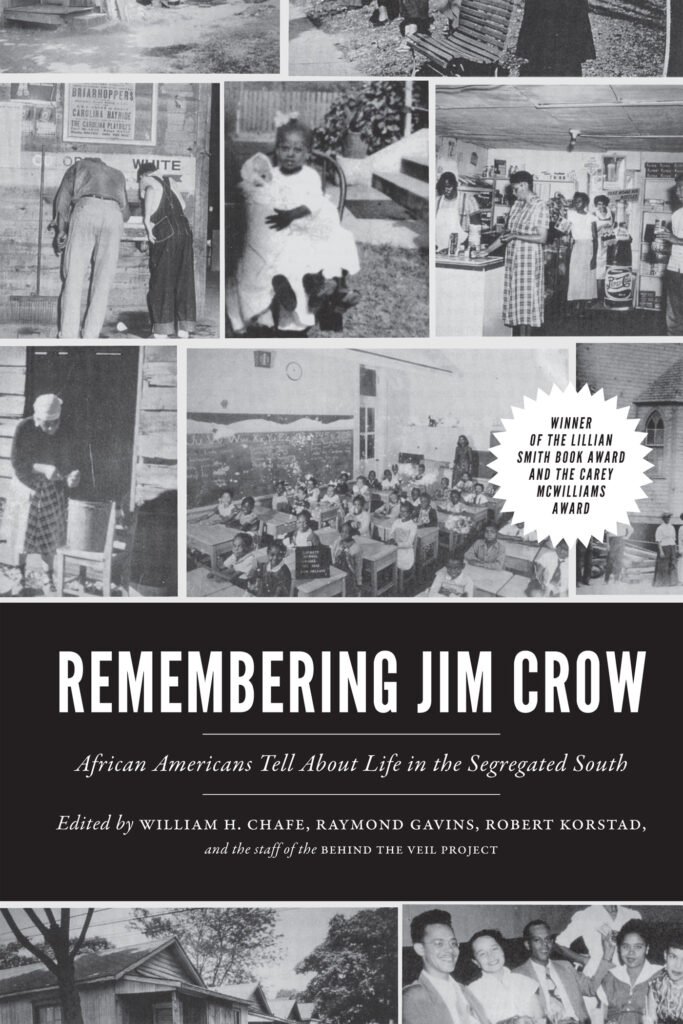
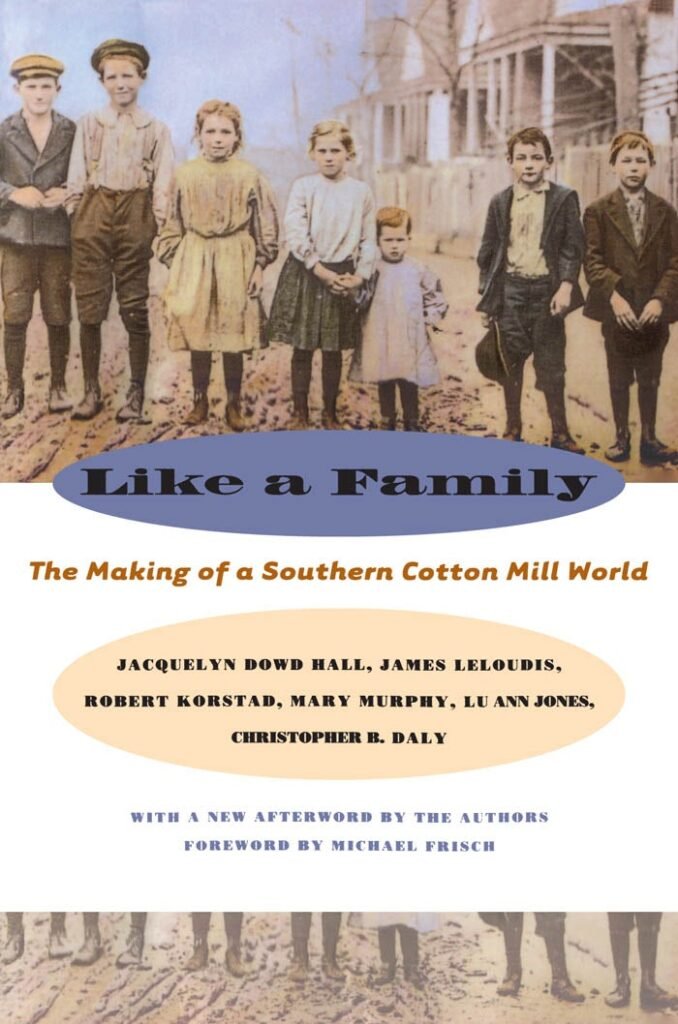
Since its original publication in 1987, Like a Family has become a classic in the study of American labor history. Basing their research on a series of extraordinary interviews, letters, and articles from the trade press, the authors uncover the voices and experiences of workers in the Southern cotton mill industry during the 1920s and 1930s. Now with a new afterword, this edition stands as an invaluable contribution to American social history.
“The genius of Like a Family lies in its effortless integration of the history of the family — particularly women — into the history of the cotton-mill world.” — Ira Berlin, New York Times Book Review
“Like a Family is history, folklore, and storytelling all rolled into one. It is a living, revelatory chronicle of life rarely observed by the academe. A powerhouse.” — Studs Terkel
“Here is labor history in intensely human terms. Neither great impersonal forces nor deadening statistics are allowed to get in the way of people. If students of the New South want both the dimensions and the feel of life and labor in the textile industry, this book will be immensely satisfying.” — CHOICE
Public History